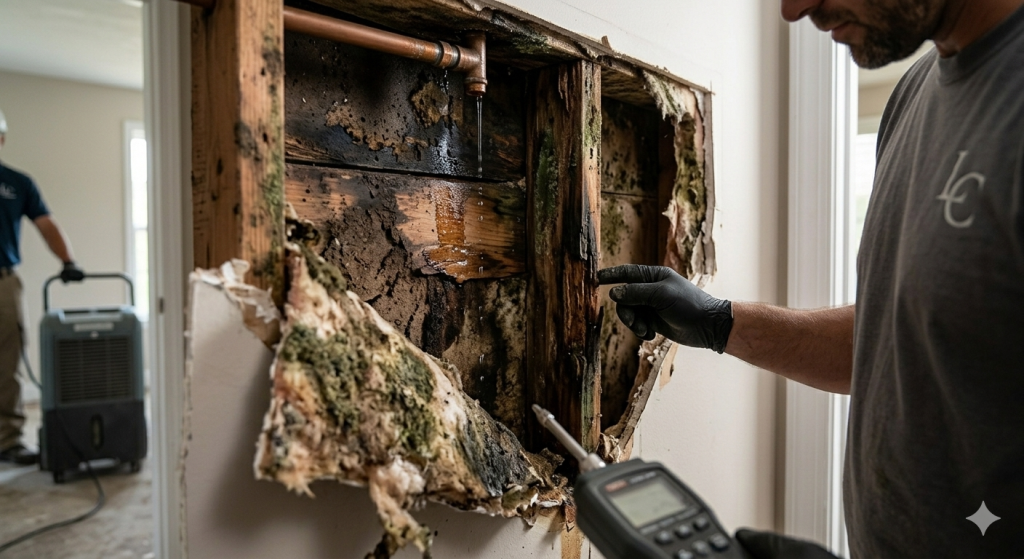
Professional Mold Removal, Sheetrock Repair & Water Damage Restoration
Mold can begin growing within days after water damage. Learn how mold forms, when drywall needs replacement, and why professional mold removal may be necessary to protect your home.
tel:+13602301133 📞 Call (360) 230-1133What Causes Mold After Water Damage?
Water damage creates the perfect environment for mold growth. Whether the moisture comes from a leaking pipe, damaged roof, overflowing appliance, or flood, damp building materials can quickly become a breeding ground for mold.
Common problem areas include drywall, insulation, baseboards, crawl spaces, and attic spaces. Once moisture becomes trapped behind walls, mold can spread without being immediately visible.
How to Remove Mold Safely
One of the most common questions homeowners ask is: “How do I remove mold after water damage?”
The first step is identifying and stopping the source of moisture. Without addressing the water issue, mold will likely return even after cleaning.
Proper mold removal may require:
- Locating the source of water damage
- Removing mold-damaged materials
- Drying affected areas completely
- Cleaning contaminated surfaces
- Replacing damaged drywall or sheetrock
- Restoring affected areas
Small surface mold may sometimes be cleaned, but mold hidden inside walls often requires professional removal and repairs.
When Mold Removal Requires Sheetrock Repair
Drywall and sheetrock absorb moisture easily. When they remain wet for extended periods, mold can develop inside the material and spread behind walls.
Sheetrock repair or replacement is often necessary when:
- Drywall is soft or crumbling
- Mold growth is visible
- Water stains continue returning
- The wall has become swollen or warped
- Hidden moisture remains behind the drywall
Removing affected materials allows repairs to be completed correctly and helps prevent recurring mold problems.
Signs Mold May Be Hiding Behind Drywall
- Musty odors
- Water stains on walls or ceilings
- Bubbling or peeling paint
- Visible mold spots
- Warped drywall
- Soft sheetrock
- Increased allergy symptoms indoors
These warning signs may indicate hidden water damage and mold growth inside wall cavities.
Why Professional Mold Removal Matters
Mold growth is often larger than what is visible on the surface. Water damage can affect drywall, framing, insulation, ceilings, and other building materials.
A licensed and bonded contractor can help identify the source of moisture, remove damaged materials, complete sheetrock repairs, and restore affected areas correctly.
Frequently Asked Questions
The source of moisture must be identified and corrected before affected materials are cleaned, dried, repaired, or replaced.
Yes. Mold frequently develops behind drywall when moisture becomes trapped inside wall cavities.
In many cases, mold-damaged sheetrock should be removed and replaced to prevent recurring problems.
Common signs include stains, musty odors, peeling paint, warped drywall, and visible mold.
Yes. We help homeowners with mold removal, water damage repairs, drywall replacement, and sheetrock repair.
Schedule Your Inspection Today
Don’t let mold or water damage turn into a larger repair.
📞 (360) 230-1133
tel:+13602301133 Request Service